1. Introduction
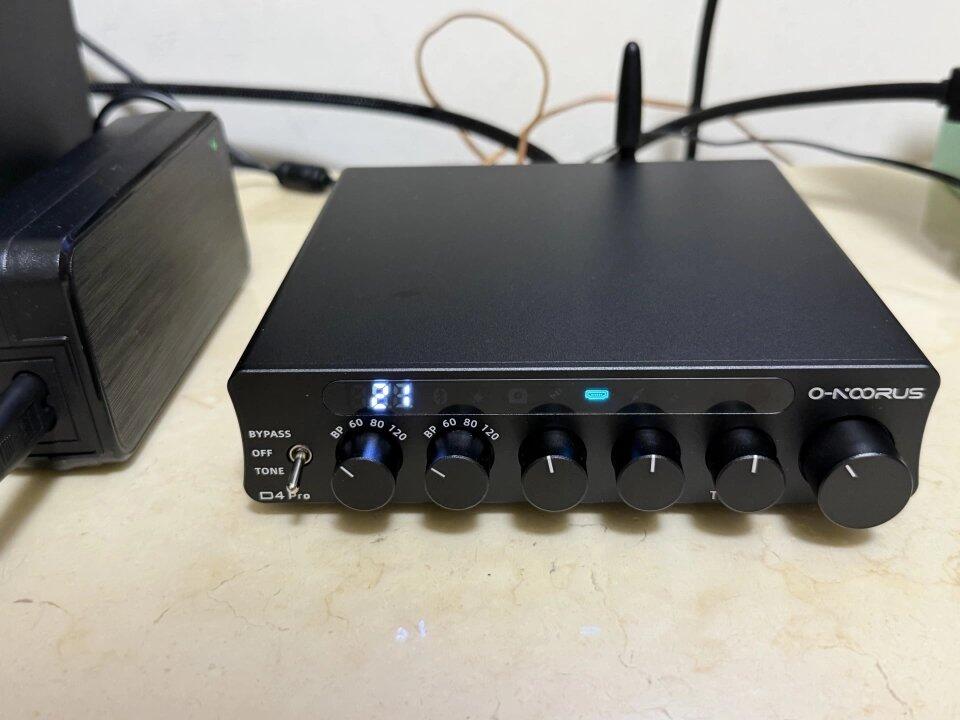
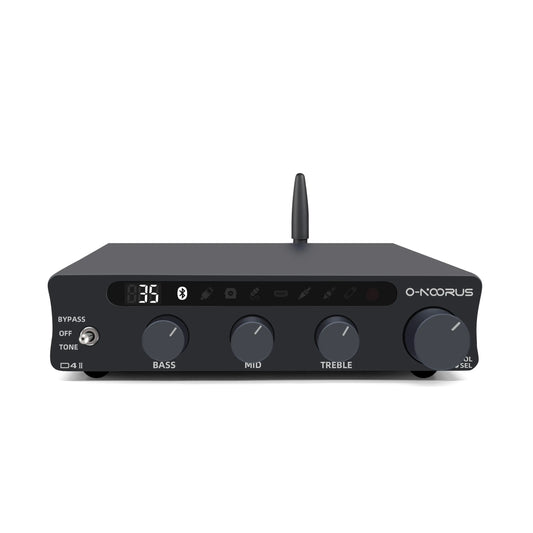
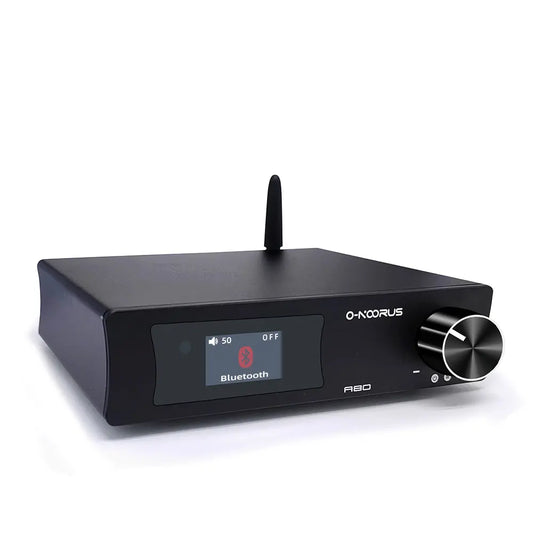
Meet the O-NOORUS D4 PRO, a powerful and versatile stereo amplifier designed for modern Hi-Fi systems, desktop audio, and home entertainment.
Powered by the Texas Instruments TPA3255 amplifier chip and featuring Post-Filter Feedback, or PFFB technology, the D4 PRO combines powerful amplification, flexible connectivity, and precise sound customization in one compact unit.
Whether you're upgrading your TV audio, building a desktop Hi-Fi system, or creating a 2.1-channel setup, the D4 PRO gives you the flexibility to build your ideal sound system.
2. Multiple Audio Inputs
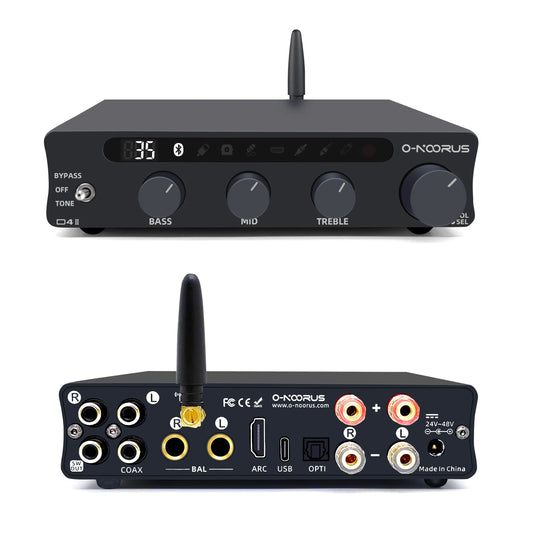
The D4 PRO supports a wide range of audio inputs to accommodate different sources and listening preferences.
Connect your TV through HDMI eARC or ARC for convenient home entertainment.
Use USB to connect a compatible computer, or choose optical and coaxial digital inputs for your TV, CD transport, or other digital audio sources.
For wireless listening, Bluetooth lets you stream music directly from your compatible smartphone or tablet.
The D4 PRO also features RCA analog and balanced audio inputs, making it easy to integrate with traditional Hi-Fi equipment and compatible balanced sources.
With this comprehensive connectivity, you can enjoy music, movies, and games through a single amplifier.
3. Powerful Stereo Speaker Outputs
At the heart of the D4 PRO is the TPA3255 Class-D amplifier, designed to deliver powerful stereo performance with low distortion.
Connect your passive bookshelf speakers or other compatible passive speakers to the left and right speaker terminals.
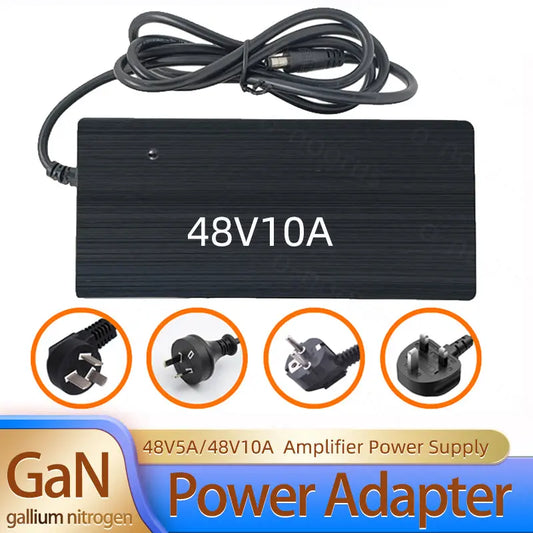
With a suitable power supply and compatible speakers, the D4 PRO can deliver up to 200 watts per channel under specified operating conditions.
Its PFFB technology helps improve frequency-response consistency and reduce distortion, supporting clean, detailed sound reproduction.
From delicate musical details to dynamic movie soundtracks, the D4 PRO is built to bring your favorite content to life.
4. Three-Band Tone Control
Fine-tune your listening experience with the D4 PRO's three-band tone control.
The Bass control adjusts low-frequency emphasis, giving music more weight and impact when desired.
The Mid control lets you fine-tune the midrange, helping you shape vocals and instruments to suit your preferences.
The Treble control adjusts high-frequency emphasis, allowing you to tailor brightness and detail.
Each control works independently, so you can create a sound signature that matches your speakers, room, and personal taste.
And when you prefer a more direct, unaltered sound, simply switch to Tone Bypass mode to bypass the tone-control circuitry.
5. Adjustable High-Pass Filter for Main Speakers
One of the key features of the D4 PRO is its built-in high-pass filter, or HPF, for the main speaker outputs.
You can select 60 hertz, 80 hertz, 120 hertz, or Bypass.
A high-pass filter reduces low-frequency signals below the selected crossover region, helping your main speakers focus more on the frequencies they handle best.
For example, when using compact bookshelf speakers with a subwoofer, selecting an appropriate HPF can reduce the demand for deep bass from the main speakers.
This can help improve system integration and provide cleaner, more controlled playback.
If you want your main speakers to receive the full frequency range without the HPF engaged, simply select Bypass.
6. Dedicated Low-Pass Filter for the Subwoofer
The D4 PRO also features a dedicated subwoofer output with an adjustable low-pass filter, or LPF.
Choose 60 hertz, 80 hertz, 120 hertz, or Bypass to suit your system configuration.
The low-pass filter reduces frequencies above the selected crossover region, allowing your active subwoofer to focus on low-frequency reproduction.
This helps you integrate deep bass with the main speakers for a more balanced listening experience.
By combining the main-speaker HPF with the subwoofer LPF, you can build a practical 2.1-channel system without needing a separate external crossover.
For the best results, choose the crossover settings according to your speakers, subwoofer, room acoustics, and listening preferences.
7. Build Your Own 2.1-Channel System
Creating a 2.1-channel system is straightforward.
Connect your left and right passive speakers to the D4 PRO's main speaker outputs.
Then connect the subwoofer output to a compatible active subwoofer.
Select suitable HPF and LPF settings to help the main speakers and subwoofer work together.
The main speakers reproduce the stereo soundstage, while the subwoofer adds the low-frequency foundation.
Whether you're listening to music, watching movies, or gaming, this flexible setup gives you greater control over the balance between clarity, impact, and bass extension.
8. HDMI eARC/ARC and TV Remote Control
For a modern living-room setup, the D4 PRO supports HDMI eARC/ARC with CEC control.
Connect your compatible TV to the amplifier using an HDMI cable connected to the TV's HDMI ARC or eARC port.
Once configured correctly, CEC allows supported TV remote commands, including volume control and power control, to work with compatible connected equipment.
This means you can enjoy your TV's audio through your passive speakers while keeping everyday operation simple and convenient.
No need to rely on a separate amplifier remote for every volume adjustment.
The D4 PRO brings traditional stereo amplification into a more convenient home entertainment setup.
9. Flexible Hi-Fi Applications
The D4 PRO is designed to adapt to different listening environments.
Use it as a desktop amplifier with your computer and bookshelf speakers.
Connect it to your TV for a more engaging stereo home entertainment system.
Pair it with an active subwoofer to create a 2.1-channel music or movie setup.
Or integrate it into a traditional Hi-Fi system using its balanced and RCA inputs.
With multiple input options, adjustable tone controls, and independent HPF and LPF settings, the D4 PRO offers flexibility for a wide range of audio setups.
10. Closing
The O-NOORUS D4 PRO brings together powerful TPA3255 amplification, PFFB technology, extensive connectivity, three-band tone control, and adjustable crossover management.
From desktop Hi-Fi to living-room TV audio, from stereo listening to a customized 2.1-channel system, it gives you the tools to build a system around your needs.
More ways to connect. More control over your sound. More enjoyment from every listening session.